Showing posts with label Olympics. Show all posts

Friday, 1 March 2013

Olympics: Wrestling with the political game

For wrestling to get back into the Olympics, it must win the vote against new contenders: rollers sports, karate, wushu, baseball and softball, squash, climbing and wakeboarding. Some, such as roller sports, don't have the history that wrestling does, but others, such as wushu and karate, have extensive histories, and international appeal. It would therefore be a mistake to rely on sentimental arguments.

These are also sports that have been lobbying for years and are used to the campaigning involved. A failure to recognise the need for lobbying, was a factor in Wrestling being voted out, as shown by its defeat by modern pentathlon, a fair less popular sport, but one with a similar sentimental claim, and a powerful lobby behind it, led by Juan Antonio Samaranch Jr, the son of the former IOC President.

The first item on the agenda should be finding powerful and persuasive figureheads to offset the lack of countries with a strong wrestling tradition on the executive committee. The IOC have a history of being won over by international leaders (see Tony Blair's influence on winning London the 2012 games), so public shows of support for wrestling from Vladimir Putin and Donald Rumsfeld should be used to open doors and persuade voters. Putin could be especially influential, as the IOC executive committee is meeting in St Petersburg in May, and Russia is a traditional Olympic powerhouse. Similarly, wrestling is a national pastime in a number of populous nations that may become future powerhouses, such as Turkey (a possible host in 2020), and Iran.

Next, FILA (wrestling's governing body) needs to recognise that gender equality is one of the driving forces in recent IOC decision making. The committee has been looking to equalise the number of sports and events open to each gender, hence the opening up of female boxing, and the inclusion of sports such as trampoline gymnastics and synchronised swimming can be seen as a part of the same movement. Although Olympic wrestling opened up to female competitors in 2004, it has four weight classes, as opposed to 14 for men. Were a female only sport, such as netball, added to the games, that might offset the imbalance, but none are up for inclusion at the moment. Instead, the rise of female competition in the United States and Japan offers a blueprint for the future. Reduce or eliminate the imbalance, and committee members will have one less reason to drop the sport. This is a move that FILA should be making regardless. As boxing and weightlifting have shown, the days of male-only disciplines are rightly dying out.

Finally, the wrestling campaigners need to tackle some of the IOC's views on their sport. Wrestling may be old, but has a great deal of participants, with more medal winners at London 2012, than the modern pentathlon had participants (29 and 26, respectively). If modern pentathlon, invented by the father of the modern games Pierre de Coubertin, is being retained for historical reasons, then wrestling has a stronger claim on those grounds. It has also improved its record on doping, and was popular in attendance and televisual terms in London.

Perhaps IOC's real intention is not to drop wrestling, but to fire a shot across its bows. FILA was warned in 2002 that the sport needed to change, and appears to have failed to heed those warnings. Early indications would suggest that there is plenty of introspection in wrestling circles at the moment, so perhaps the IOC has succeeded in persuading FILA to reform. Perhaps the committee will also be chastened enough by the bad publicity following their decision, that some members waver. Others may be willing to ride it out though.

There is a wider question about what should be an Olympic sport. A gold medal should be the pinnacle of each sport that is part of the games, and the record of the likes of tennis and football is poor in this regard. Many remain unconvinced that golfers will ever value a medal over winning a major. For wrestling, the Olympic Games is the pinnacle, and the battle is persuading the executive committee that both parties need each other. In truth though, wrestling needs the Olympics, far more than the Olympics need wrestling, at least for now.

Thursday, 21 February 2013

Olympics: Wrestling the loser in the battle between tradition and ratings


Last week's controversial decision by the IOC to eliminate wrestling from the Olympics has raised the perennial question of what defines an Olympic sport, leading to the question of what the Olympic Games are supposed to be. Is the IOC supposed to be upholding tradition or showcasing the world's most popular sports? Do the games need to work to stay relevant to younger generations or will those generations come to them? Tradition, popularity, money, television ratings, gender equality, politics, diplomacy, how should these factors balance against each other? There are no easy answers.

The exclusion of wrestling from the Olympics is a defeat for tradition. The sport was part of the original Olympics, and portrayals of wrestling are amongst the iconic images of of the ancient games. This is not a reason to keep the sport on its own, chariot racing has not survived to the present day, but combined with its history of being part of every modern games apart from 1900, it feels like a part of the identity of the games.

The decision seems to have been based on a desire to modernise the games, to make them more popular internationally, and to appeal to a younger audience. Those are reasonable intentions, a desire to keep the Olympic movement alive for future generations. Television ratings and money are necessary in order to fund their ongoing existence, so pursuing those is no great evil.

A number of sports are campaigning for inclusion in its place: baseball and softball, karate, squash, roller sports, sport climbing, wakeboarding and wushu. Presumably the IOC feels that at least one of these has a greater international and generational appeal. Nonetheless, sports come and go in popularity, and it would be a mistake to throw one that has lasted as long as wrestling has, for another that has yet to prove whether it has lasting power.

Wrestling - ready
Photo by Inkysloth via Flickr
The risk is that in race for survival, the games change so much that they lose their identity and dilute their brand, until they are lost in the international sporting landscape. Moreover, there seems to be no immediate need to make those sorts of compromises, viewing figures have never been higher, the games have never been more popular around the world, the era of boycotts and financial uncertainty in the 70s and 80s, when hosting the games was undesirable to many nations, has been replaced by an era when countries around the globe go to great lengths to accommodate the IOC, changing laws and making financial guarantees. It should then be possible to accommodate some modernity, such as the inclusion of BMX and kayaking, without compromising the history of the Olympic brand, and the sports that give the games their connection with the past.

All is not lost though, wrestling will now compete with those other sports for the spot that it has vacated, at a vote to be held in September. In part two of this post, the equation that wrestling faces is explored.

Tuesday, 21 August 2012

London 2012: Enjoy Team GB's success while it lasts, but don't be disappointed when it doesn't

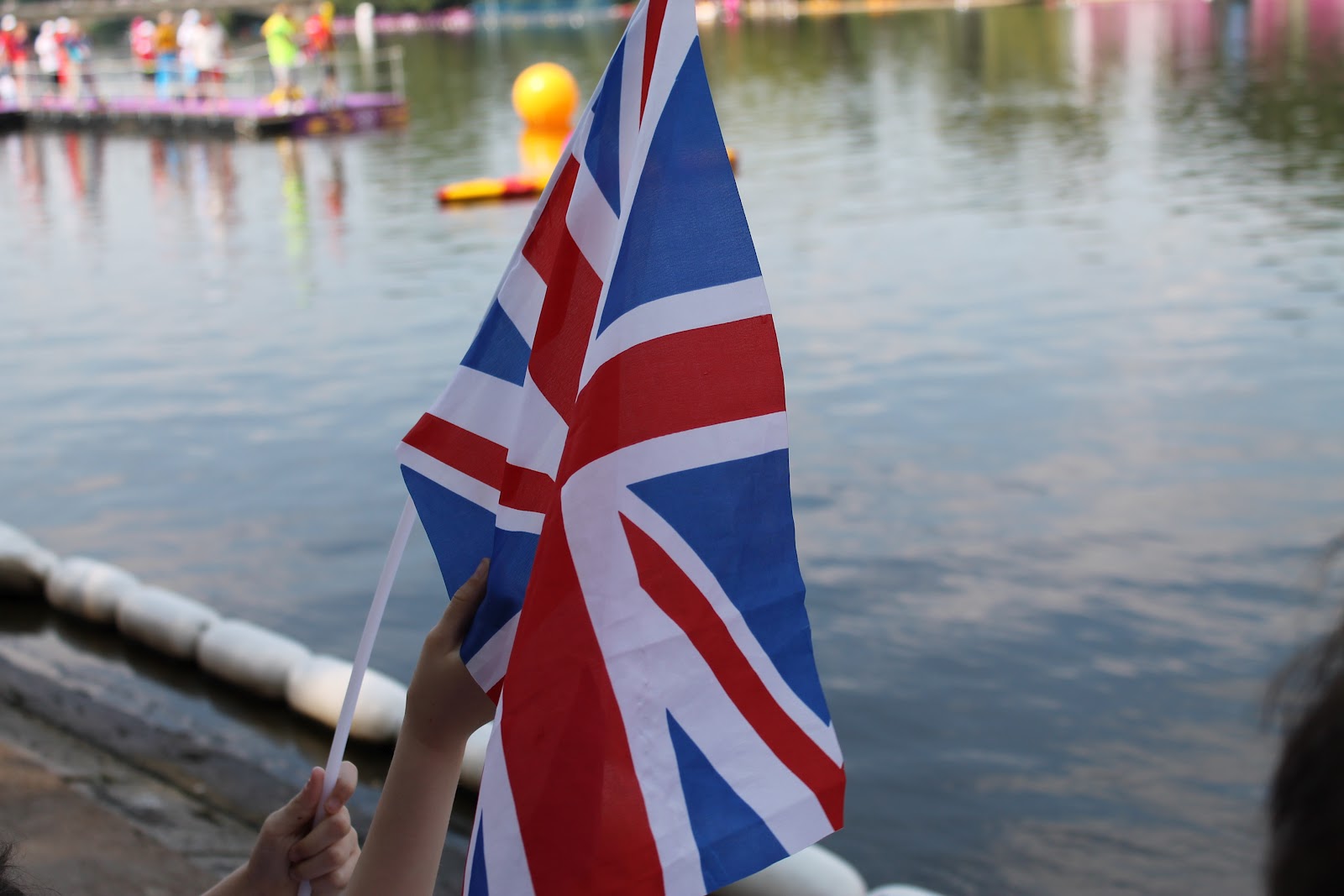
A young fan waves a Union Flag at the Olympic Women's 10k Swim in Hyde Park
The reaction to Great Britain's success in the London 2012 medal table has been euphoric. After the disappointment of Atlanta 1996 (one gold medal, 36thoverall), top ten finishes in Sydney (11 golds, 10th) and Athens (nine golds, 10th), were seen as great successes, but the performances in Beijing (19 golds, fourth) and London (29 golds, third), have taken Team GB to new heights. The achievements of Mo Farah, Jessica Ennis and their team mates have been a joy to behold, but should not be allowed to spoil future Olympic accomplishments for the public either.

Host nation success is a well-documented phenomenon, and usually begins four years prior, as funding has already been improved in anticipation of the home games. This goes some way to explaining British success in Beijing, but the roots of that performance go back to the steady improvement after Atlanta, when the introduction of lottery funding coincided with national humiliation, and a recognition that the sporting landscape had changed since the end of the amateur era, requiring a more professional outlook from administrators. Factor in the increased funding that then arrived after London's successful bid in 2005, and the advantage of home crowds and conditions, and Team GB's performance is less surprising.

Britain has not seen this level of success since the days when far fewer nations took part. However, every team in every sport has its ceiling, Team GB cannot compete with China or the United States due to population size and funding, so third is the highest realistic place available. Without home conditions and support, it will be harder to find a competitive advantage. Meanwhile the chasing pack includes more populous nations, many of them emerging into the economic maturity necessary for Olympic success. As a fascinating article by Grantland's Tyler Cowen and Kevin Grier explains:

“If a country is made up of subsistence farmers, it is not going to have much athletic infrastructure, government or private support, or even enough well-nourished citizens to excel in sports on the global stage... So, being rich in raw materials (people) and having the wealth to develop them are the main economic determinants of Olympic success ”

The chasing pack can, for these purposes, be divided into groups.

  1. The sleeping giants: Brazil, host of the 2016 games, has one of the fastest-growing major economies in the world, and the number of Brazilians who will have access to sports infrastructure is only going to grow. Several nations, including India, are at different stages of this process.
  2. The former powerhouses: those such as Russia who once dominated, covet that status again, and have the national will to ensure the prerequisite levels of funding are in place.
  3. The specialists: nations that are unlikely to challenge across multiple sports, but which focus their attention on specific areas, allowing them to punch above their weight, for example Kenya in long distance running, or Bulgaria (highlighted by Cowen and Grier) in weight-lifting, wrestling and shooting, which have provided 32 of their 51 gold medals to date.

The first two groups will all have their eyes on Britain's third place, and the third group will be aiming for top ten finishes. Economic and population growth in the UK and other developed nations is slowing in relation to these challengers. Combined with the increased number of Olympic nations since the splintering of Eastern Europe, the end of the era of boycotts, and the rise in interest in countries with no real Olympic tradition, and the spread of medals is only going to become more diverse.

What does this mean for public perception of Team GB? Setting aside the argument that the medal table is somewhat artificial, as is the idea of an Olympic team, since what Chris Hoy does in the velodrome has no bearing on what Anthony Joshua does in the ring, London 2012 was probably the high water mark for the British team. The government has promised to maintain current levels of funding through 2016, but there are no long term guarantees.

The public reaction to Team GB is reminiscent of that towards the England rugby and cricket teams in 2003 and 2005. In the short term, both benefited from the increased attention, but when results declined, it meant greater scrutiny of their failings than before. Will there be a backlash when Britain inevitably drops down the medal table? Athletes performing to the best of their abilities may no longer be feted, but unfavourably compared to their 2012 predecessors. Falling out of nightclubs a sign of malaise, rather than well-deserved letting off of steam. The intense public disappointment at Australia's tenth place finish in London illustrates the dangers of raised expectations.

What is the solution? The British Olympic Association and other organising bodies must continue to seek new competitive advantages, but those are hard to find and harder to maintain, so perhaps the onus is instead on the media and the public to enjoy this success while it lasts, be nostalgic about it when it passes, but not to greet that passing with anger and disappointment.

So long as the Olympians of 2016, 2020 and beyond perform to a level commensurate with Britain's position in the world, 2012 need not become a millstone around their necks. Cherish this moment, and if Team GB returns to its positions from Athens and Sydney, those performances were once cause for celebration, and in an increasingly competitive Olympic world, would deserve to be celebrated again. London 2012 was a once in a lifetime moment for the British, not just as hosts, but also because of the performance of their team. Enjoy it while it lasts, but don't let it become cause for future disappointment.

Monday, 1 March 2010

Olympics: Medvedev Mad at Medals Total

The Russian president, Dmitry Medvedev is not a happy man if his recent comment are to be believed. Russia's disappointing medals tally at the Vancouver games has been a source of much anger at home, and he has been quick to demand changes. He will of course, have to be careful how he treads and who he criticises, given the role that Vladimir Putin played in setting up the funding for the Olympic programme, but, with the Russians now on the clock as the next hosts of the Winter Olympics, the pressure will be on to ensure that they can produce results to match those of Canada, whose slow start in Vancouver was forgotten by the end of the games, as they topped the medals table and won the all important final gold medal in the men's ice hockey.

Medvedev meet with United Russia Party leaders
Medvedev has made his dissatisfaction with the Russian Olympic team clear

From a neutral point of view, it always seems to make for a better games when the host nation does well, which they often do, as it lifts the home crowds and builds the atmosphere. Four years is a long time in sport though, and Britain's turnaround from an embarrassing show at the 1996 Atlanta games to a successful Sydney Olympics, shows that it can be done. If the Russians fail however, there will be some uncomfortable questions for the sportsmen and women, and the administrators from the very highest levels of power, that much is now clear.

Wednesday, 20 January 2010

Olympics: Blood in the Water

It's only up on the iPlayer for a few more hours, but if you have 15 spare minutes, listen to 'Blood in the Water', the story of the clash 1956 Olympic water polo clash between the Hungarian and Soviet teams, played against a backdrop of revolution in Hungary. Whilst the Soviet army was ruthlessly crushing the uprising, the encounter in Melbourne was a famously bloody encounter.

The third part in this series of 'More Than a Game' deals with the 1969 war between Honduras and El Salvador, which broke out following World Cup qualifying matches, and promises to be just as interesting.

Wednesday, 7 October 2009

Olympics: New Sports Update

Following Monday's post about the likelihood of golf and rugby sevens being added to the Olympic Games, it seems that the decision is not quite the foregone conclusion that everyone seemed to think it might be. It seems that the IOC executive and golf's administrators still need to factor in the labyrinthine world of IOC politics, as well as the genuine concerns about how seriously the golf world will treat the games, that I blogged about on Monday. Perhaps unsuprisingly, it turns out that IOC members are not keen on being dictated to by the executive, and there is talk of a revolt.

I suspect this will turn out to be a false alarm and that golf will be admitted after the IOC members have made their point, but it would be nice to see the voters doing what they think best for the games, rather than what they are being encouraged to do by the executive, or rather than playing politics. If that means excluding golf (and even rugby) in a bid to maintain the Olympics' sense of occasion and to limit its size, then that may be no bad thing. The most important point is that the decision must be made for the right reasons, in the most informed way possible, and with the best intentions at heart.

Monday, 5 October 2009

Olympics: New Sports for 2016

With the venue for the 2016 Olympic Games decided, the International Olympic Committee now turns its attention to whether or not to admit golf and rugby sevens in time for the Rio de Janeiro games, with a vote taking place on 9 October. Adding sports to the games is always a tricky decision. On the one hand, a sport must not be too small, but on the other hand, if a sport is too big, the Olympic Games may struggle for relevance alongside that sport’s major events.

There are two extremes that the IOC is constantly balancing: either the games should only be for ‘traditional’ Olympic sports where a medal is the pinnacle of achievement, or it should be an all-encompassing jamboree that welcomes as many credible international sports as possible. The modern sporting world is an international and financially driven one, and it seems that most sports are chasing the holy grail of Olympic status. Governing bodies around the world know that it brings kudos, support, and funding. This time around, softball, karate, roller sports and squash have all missed out. Meanwhile others such as darts and snooker covet future places in the games.

For golf and rugby, there are different questions. Golf is undoubtedly a huge international sport. The question is whether it is too big. Despite assurances from the Royal and Ancient Society that the top players will all attend, questions remain about the attitude of the top professionals. Whilst Tiger Woods may be keen, as he has nothing left to win in the traditional calendar, will other pros really favour the Olympics over the majors? Looking at tennis, a sport with a similar calendar and culture, top players often compete in the Olympics, but not always, and it is clearly taken less seriously than the grand slam events. Witness Beijing last year, where Andy Murray admitted to being underprepared because he was focusing on the US Open, whilst Andy Roddick preferred to play a tour event in Washington, despite being a real contender for a medal. This is the situation golf must avoid. It must also battle perception, as traditionalists on both sides will see this development as unnecessary, and there will be something strange about seeing golfers on the podium, although admittedly golf does have an Olympic history dating back to the early modern games.

For rugby there is a different challenge. Rugby sevens has integrated nicely into the Commonwealth games, but it is a sport primarily played in those nations. Is rugby international enough? Would sevens properly represent the sport? Finally, how would it be taken seriously in an already packed international rugby calendar? Rugby arguably does not need the Olympics, it has its own prestigious world cup, and sevens is largely regarded as a sideshow that excludes many of the world’s top 15-a-side players. However, there are two key counter-arguments. The first is that outside of the major rugby nations, the game lacks funding and publicity. Olympic inclusion would bring both of those to national teams who would gain exposure and access to central funding, thus expanding the game. Secondly, the IRB has committed to abandoning the sevens world cup in favour of the Olympics, thus helping to create space in the calendar, and making the Olympic medal the biggest prize in sevens. With the games taking place in the European rugby off-season, many top players would be available, although those from the Southern Hemisphere would need to be released from Tri-Nations duty. The fact remains however, that throughout the rugby world, the Olympics would not be the biggest prize in the overall game. A situation may arise similar to that in football, where the games are seen as an annoyance in many circles, although there is greater enthusiasm in Africa and South America than there is in Europe, with its crowded schedule and powerful club game. Inclusion may be good for rugby, but whether it is good for the Olympics is debatable.

Ultimately it is for the IOC to decide what is best for the Olympic games. For those who see football and tennis as being surplus to requirements because neither sport cherishes its involvement, this will seem an unnecessary expansion that will only dilute the Olympics. Arguably one of the selling points of the Olympic games is that it is a showpiece event for sports that do not otherwise always garner such attention. The marquee events are the athletics and swimming, and those are what the public associate with the games, whereas rugby and golf will always be associated with other tournaments. Would squash and karate not have fitted in better with the current portfolio of sports? For others however, it will make the games more relevant, and ensure the presence of even more of the world’s top sporting stars.

It seems a given that both sports will be voted in, as they have been recommended to the IOC by its own executive board, and only time will tell whether or not rugby and golf fit neatly into the Olympic family.